Freelancers and independent consultants often sprint relentlessly through client deliverables, administrative invoices, and project deadlines, only to arrive at Friday evening feeling completely exhausted yet strangely uncertain about their actual business progress. Without a dedicated weekly audit, small revenue leaks and unchecked scope creep slowly derail independent careers.
Implementing a practical weekly sprint review template freelancers can execute in thirty minutes changes everything. By pausing once a week to examine your finished output, calculate your true effective hourly rate, and inspect client communication bottlenecks, you gain full command over your solo enterprise.
Why Freelancers Need a Sprint Review
In traditional corporate agile frameworks, sprint reviews exist to demo software to external stakeholders. For independent professionals, however, your most critical stakeholder is yourself. According to research on knowledge work productivity published in the Harvard Business Review, professionals who actively eliminate low-value tasks and evaluate weekly performance reclaim up to 20% of their billable capacity.
Running a solo sprint review bridges the gap between daily execution and long-term financial stability. It prevents the dreaded “freelance feast-or-famine” cycle by guaranteeing that client delivery, lead generation, and business administration receive balanced weekly attention.
The 30-Minute Friday Habit:
Schedule your sprint review every Friday at 3:30 PM. Treat this appointment as an inviolable client meeting. Never close your laptop for the weekend until your review template is fully completed.
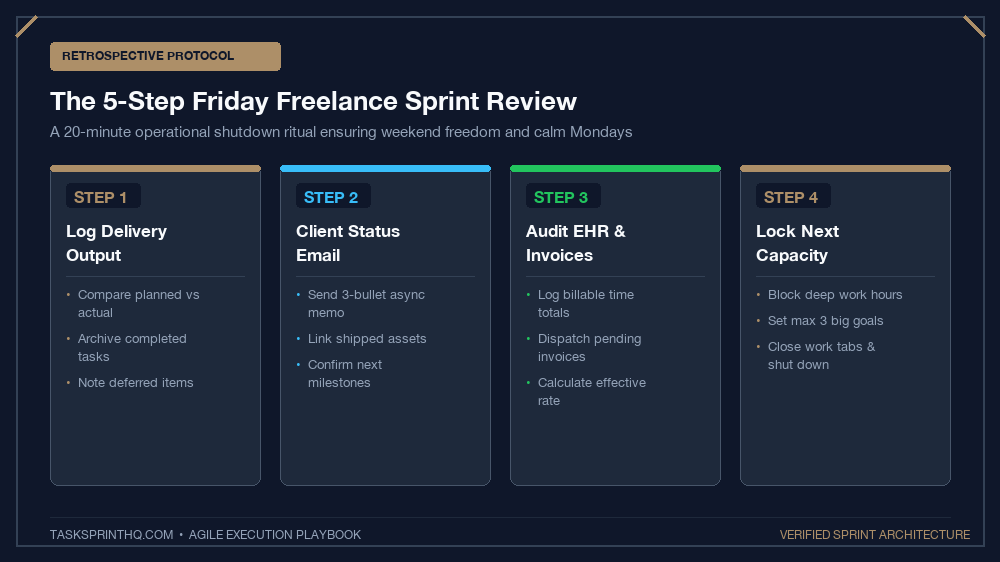
The 5-Section Freelance Sprint Review Template
Copy and paste this structured framework into your preferred digital notebook (Notion, Obsidian, or Google Docs) every Friday afternoon:
Section 1: Deliverable Scorecard & Output Audit
Document the cold, objective facts of what shipped during the week:
- Planned Sprint Goals: List the 3–5 core milestones you committed to on Monday morning.
- Shipped Deliverables: Which client milestones reached final sign-off or production deployment?
- Unfinished Items: What tasks stalled, and what specific external or internal blocker caused the delay?
If you pair this audit with our system for a personal daily sprint framework, you will immediately spot whether your daily estimations were overly optimistic.
Section 2: Financial and Billable Hours Reconciliation
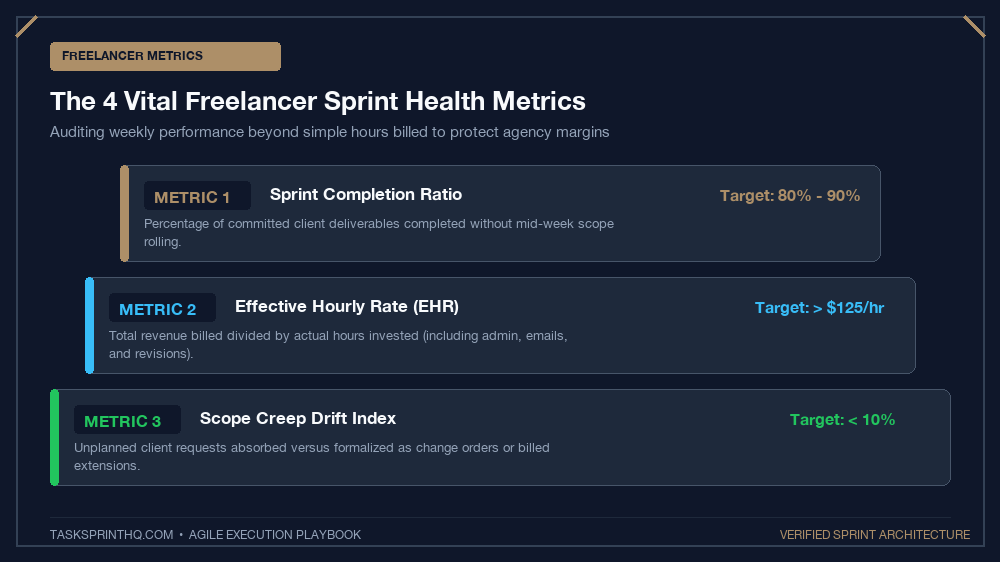
Review the economic performance of your week. Freelancers who track only raw hours frequently miss hidden non-billable overhead:
- Total Billable Hours Logged: Multiply by your standard billing rates.
- Non-Billable Administrative Hours: Include client email threads, invoicing, proposals, and file organization.
- Effective Hourly Rate (EHR): Divide your total gross revenue earned this week by total hours worked. If your EHR drops significantly, you are drowning in unbilled client administration.
- Invoices Dispatched & Received: Verify that no completed milestones sit without an immediate billing request.
Section 3: Scope Creep & Boundary Diagnostic
Scope creep is the silent killer of freelance profit margins. Ask yourself these diagnostic questions:
- Did any client request “quick revisions” that fell outside the agreed statement of work?
- Did you accept emergency rush deadlines without charging an expedited project fee?
- Did you spend unpaid time researching tools that should have been billed as project discovery?
Section 4: Marketing & Pipeline Pipeline Health
When freelancers get busy with delivery, business development is usually abandoned—creating a dry pipeline next month. Record your pipeline activity:
- Number of discovery calls conducted.
- Number of active proposals pending client signature.
- Outreach touches, referral check-ins, or published portfolio case studies.
Section 5: Next Week’s Sprint Horizon
Conclude your review by seeding your visual board. If you manage your client flow using a solopreneur Kanban board setup, move 3 to 5 priority cards into your “Next Sprint” column so Monday morning begins with instant momentum.
Sample Weekly Review Scorecard
Here is what a completed review template looks like in practice for an independent creative consultant:
| Metric / Category | Weekly Target | Actual Result | Action Required |
|---|---|---|---|
| Billable Focus Hours | 25 Hours | 21 Hours | Reduce Tuesday Slack chat interruptions |
| Gross Billed Revenue | $2,500 | $2,750 | Deliverable bonus unlocked on Client B |
| Effective Hourly Rate | $95 / hour | $82 / hour | Automate proposal drafting with templates |
| Pipeline Touches | 5 Prospects | 2 Prospects | Block Monday morning for 3 warm referrals |
The Mental Boundary: Transitioning from Review to Rest
One of the most profound benefits of running a structured weekly review is psychological shutdown. Remote freelancers rarely leave a physical office building; your laptop sits ten feet from your dining table. Without a deliberate checkpoint, unfinished client problems linger in your thoughts throughout Saturday and Sunday, driving subtle chronic burnout.
Completing your review scorecard acts as a psychological seal. When you write down what was completed, catalogue what is deferred, and log your next steps in your planning board, your subconscious mind is released from holding those open cognitive loops. You can shut your laptop lid at 4:00 PM on Friday knowing with absolute certainty that Monday morning’s itinerary is completely mapped out.
Auditing Client Red Flags Before Next Sprint
Use Section 3 of your weekly review to catch toxic client behavior before it drains your business. If a particular client generated three unplanned revision rounds, sent emergency text messages during dinner, or delayed feedback until Thursday night, document it under your weekly notes. Over two or three sprints, patterns emerge clearly: you will know exactly which clients deserve price increases or project offboarding.
How to Prevent Review Fatigue
Many freelancers start weekly reviews with great enthusiasm, only to abandon them after three weeks. To maintain this habit long-term:
- Keep It Strictly Under 30 Minutes: If your review takes an hour, your template is too complicated. Focus exclusively on the numbers that drive profitability.
- Store All Reviews in One Running Document: Keeping fifty-two weekly entries in a single chronological document creates an extraordinary business journal. You can review seasonal revenue patterns and celebrate professional growth.
- Link Reviews to Immediate Rest: Close your review immediately before a rewarding weekend ritual—such as a workout, a walk, or dinner with family—to reinforce the psychological reward.
Take Control of Your Solo Practice
Freelancing without a weekly sprint review is like sailing across the ocean without checking your navigational compass. By adopting this weekly sprint review template freelancers can rely on, you will protect your billable margins, prevent burnout, and build a sustainable, flourishing independent business.